Table Of Content
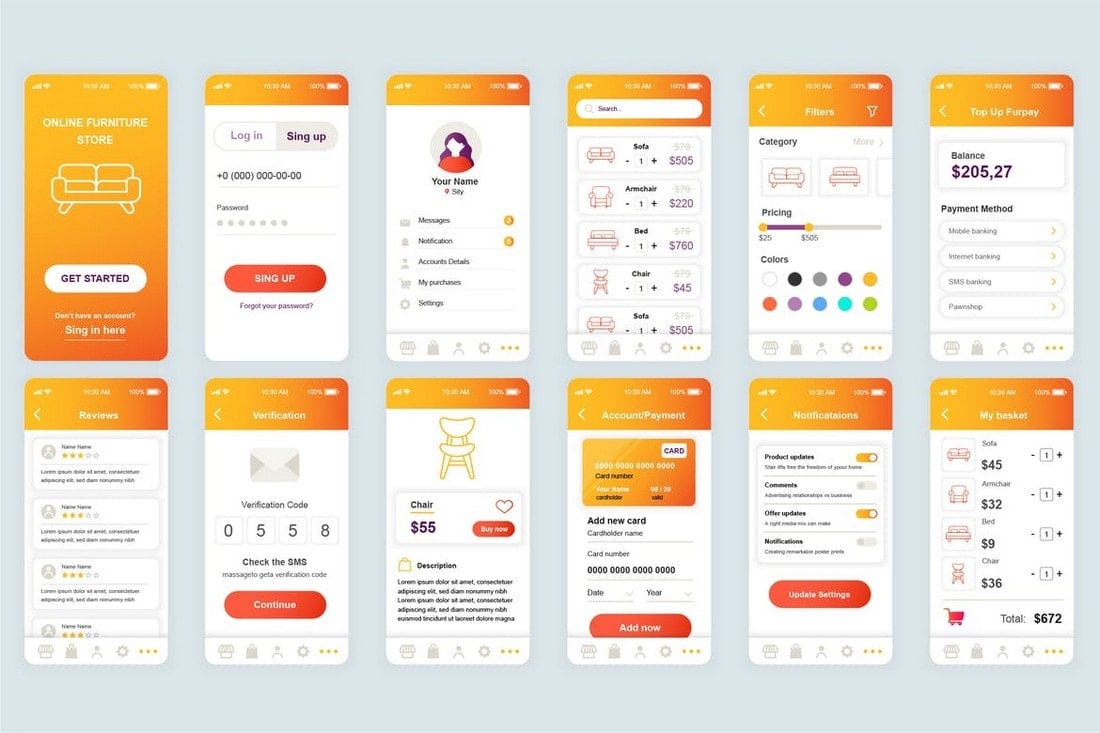
They won’t really have too much thought or input in the project beyond what you tell them to do. Conveying these styles to a designer verbally would be challenging. But showing a mood board with different theme elements to a designer has a more impactful effect.
What are some popular tools used for mobile app design?
Assuming you’ve done a thorough job of wireframing, you should have a good idea about exactly what you need to build your app to maximise user experience. It’s good practice to make it as easy as possible for people to use the main features of your app, so this should be the focus. Each one makes it super easy for the user to access the main feature. Below are some questions you can answer to help you settle on an idea for the app development process. If you don’t have an existing app idea, think about problems you or people you know struggle with and how you could solve this with a mobile app.
Integrating Mobile App Design with No-Code Platforms
Top 22 App Development Companies - Built In
Top 22 App Development Companies.
Posted: Tue, 21 Nov 2023 08:00:00 GMT [source]
For example, Zoom didn’t invent video calls, but it did make it easier for a particular group of people to make them. All the most successful apps solve a particular consumer challenge. Another good source of inspiration is the Trending SubReddits community. Every day it posts about what people are talking about on the app. Differentiates real visitors from automated bots, ensuring accurate usage data and improving your website experience.
Step #1 — Define Your Goals
They help streamline your design workflows and are targeted at UI and UX designers, whereas Photoshop is more for image manipulation. You definitely won’t have to use all of these tools, just the one that you think your team needs to take your design process to the next level. Consider the readability and mobile app UI when you’re adding CTAs. All of your design choices must ensure the app is highly responsive.
This calls for a clear definition of the single app strategy. If you think a functional app idea, a roadmap, and the budget allocation are all what you need for the strategy, think again. How much your business is willing to spend on the app will determine how quickly it can be designed and launched. The budget allocation includes capital, operating cost, human resources, and allocation of other resources.

Build Your Design Elements
Finally, I take you through the all-important testing of your designs and a few next steps. The UI of mobile apps is always changing due to user expectations, technological improvements, and new design trends. Creating aesthetically attractive and user-friendly mobile app interfaces requires staying current with the newest trends in today’s ever-evolving digital ecosystem. Mobile app development company in Dallas are concentrating on producing intuitive and immersive experiences that attract people and maintain their engagement.
Testing and Iteration
In-app ad revenue is a great way to keep your app free for the users and still remain afloat. This is the go-to monetization model for most app developers, and with good reason. Here at Digital Authority Partners, we rarely advise clients to force users to pay to download the app.
In mobile app development, the scope is defined through functional requirements and content specifications. Functional requirements refer to a solution’s intended capabilities, appearance, and interactions that help users achieve their goals. A cluttered user interface overwhelms users with too much information and complicated navigation. To enhance user experience, maintain a simple and clean UI, removing unnecessary elements or features. Always prioritize clarity and function over aesthetics and ensure users can easily access essential app features.
Why is Custom Design important for Mobile Apps?
The user interface (UI) design is often considered the ‘fun bit.’ You’ve slogged at your app databases, servers, and APIs but now it’s time to get creative once more. Overall, it is generally considered most logical to build your back-end first. The back-end drives the front-end and without its core fundamental elements, it’s difficult to envisage how your UI will come together. If you choose to make your app from scratch, you’ll have to create the entire product yourself. You’ll either need to learn a programming language, leverage developer productivity tools or hire an app maker to help you with building the app.
It’s always cheaper to buy something pre-built as opposed to building it on your own from scratch. You can usually make slight custom changes to these existing services as well. Cookie-cutter apps are fine for side projects, hobby apps, or DIYers with meager budgets. Hybrid development saves time and money compared to native development. But the performance and quality of your app might suffer as a result. Hybrid development is a cost-effective alternative to the native route.
One good example is a step-by-step checkout flow in an e-commerce app, where the designer breaks down a complex checkout task into bite-sized chunks, each requiring user action. App distribution is a necessary element of enterprise mobility and BYOD strategies. It's important to ensure that the latest versions of mobile apps are always available to in-office, hybrid and remote workers.
Give the app to your friends, family, and colleagues as well. In fact, we’ll address this shortly in the guide during the later stages of the app making process. Setting milestones will help keep you and your team on track during the app making process. Without benchmarks, you’ll have no way to track your progress. The flexibility of a hybrid app is still pretty high in terms of what the app can accomplish.




No comments:
Post a Comment